
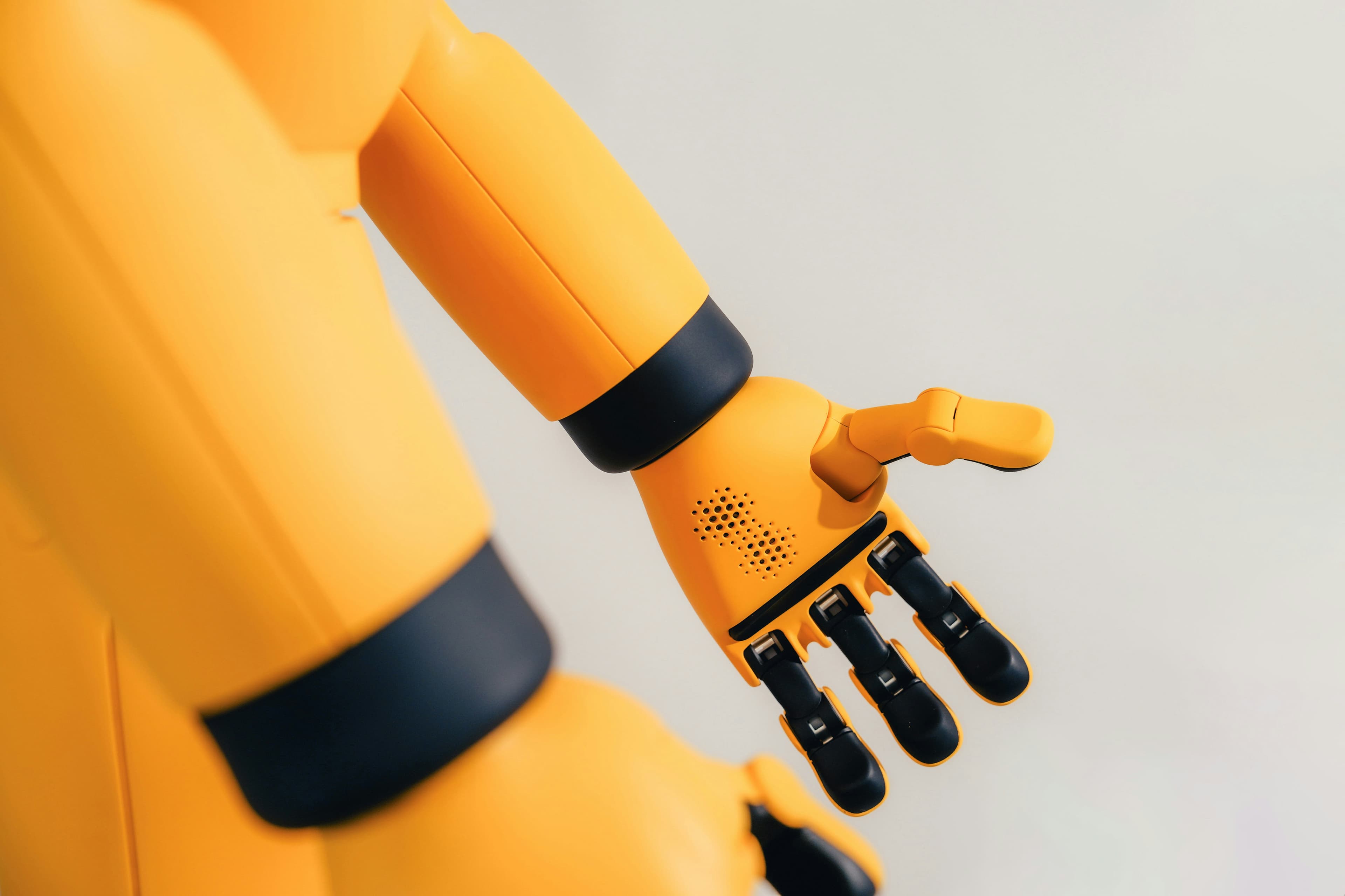
Imagine a robotics team preparing for a demonstration. This is an illustrative story, not an Annotexia customer case study.
On the table sits a blue cup. The robot reaches forward, closes its gripper and lifts it. Someone smiles. After weeks of work, that small movement feels enormous.
Then a colleague tidies the table. The cup moves a little closer to a bowl, its handle facing the other way.
The next attempt fails.
Nobody changed the task. Nobody asked the robot to do anything extraordinary. A person simply moved a cup, the sort of thing that happens in a kitchen a hundred times a day.
For the engineer watching, the difficult question is no longer, "Can it pick up a cup?" It is, "What else have we assumed will stay the same?"
Why this small moment matters in 2026
Physical AI puts intelligence into machines that perceive and act in the world. That makes ordinary variation consequential: a different surface, an obstructed view or an object that is no longer where the system expects it.
The industry's push toward deployment is visible. In its March 2026 robotics announcement, NVIDIA described work with robotics manufacturers and developers on physical AI, simulation and robot learning. On October 27, 2026, Google Cloud described its Gemini Robotics ER 2 offering, including workflows for curating and labeling demonstration videos and training custom vision-language-action models.
Our takeaway for dataset teams is practical: as more systems are prepared for real workplaces, the examples used to develop and evaluate them need to reflect how those workplaces actually change.
In our cup story, the failure alone does not prove that data is responsible. Calibration, perception, planning and control all deserve investigation. But if the team's examples repeatedly show the same cup in the same position, there is a clear coverage question to answer.
The useful part of a demonstration can be easy to miss
Now imagine asking a person to clear that table while wearing a first-person camera.
They notice the bowl, adjust their reach, turn the cup and set it down. Perhaps their first grip is awkward, so they reposition their hand. The task still looks effortless to anyone watching casually.
For a dataset team, those moments deserve attention. The recording contains a sequence: what was visible, where the hand moved, which object was touched and what changed afterward. A single photograph of a cup cannot preserve that sequence.
This is where egocentric video, recorded from the person's point of view, can help. It provides visual examples of human actions in context. Its usefulness depends on whether the relevant interaction is visible and whether the recording matches the task being studied.
A folder full of videos, however, still leaves an engineer with work to do. Which clips show an obstructed reach? Where does the grasp begin? Did the object move successfully, or did the person have to try again?
Those questions connect collection to annotation.
How Annotexia helps close the data gap
At Annotexia, our Physical AI Egocentric Video Collection service starts with the task the team needs to understand. We work with the team to define recording protocols, coordinate first-person collection and prepare reviewed footage with agreed metadata and delivery conventions.
For a project like our fictional table-clearing example, that could begin with a small collection plan covering different object positions, surrounding clutter and ways of completing the action. The exact conditions would be agreed around the research question and the intended operating environment.
The distinction matters to the person waiting for useful data. Instead of opening another batch and wondering what it contains, they should be able to trace each recording to a defined task and capture condition.
Before collection, we agree participant criteria, capture equipment, permissions and privacy requirements. During review, we check completeness, technical quality and metadata against the project scope. A recording that misses the key interaction needs to be identified before it becomes somebody else's training problem.
Our video annotation services can then add object tracks, action labels and event boundaries, according to the agreed requirements. In this example, a project might distinguish reaching, grasping, lifting and placing, with explicit rules for interrupted actions and repeated attempts.
That last detail is easy to underestimate. If one annotator calls first contact a grasp while another waits until the cup is securely held, the labels tell different stories. Shared definitions and review make the sequence more dependable for the team using it.
Where the project also needs object locations or detailed boundaries in selected frames, our image annotation services can support that work. Each deliverable should answer a specific modeling or evaluation need.
What would count as progress?
Return to the engineer beside the table. Receiving more footage would be a milestone. It would not yet establish that the robot had improved.
A useful pilot would give the team a manageable set of reviewed recordings and labels to inspect in its own pipeline. Can it find the intended variations? Are the action boundaries consistent? Do the file references and timestamps line up? Is the crucial interaction actually visible?
The team would also keep separate evaluation examples, including unfamiliar arrangements, to assess changes without testing on the same demonstrations used for development. Where practical, separating recording sessions and environments helps reduce accidental overlap.
Human video is one input to this work. It does not automatically provide robot joint commands, contact forces or a ready-to-deploy control policy. Transferring what a person demonstrates to a particular robot still requires suitable methods, robot-specific data where needed and testing on the intended hardware.
Annotexia's role is to help make the collection and annotation work deliberate, reviewable and useful. Whether it improves the robot's behavior must be measured by the robotics team.
Start with the moment that went wrong
The moved cup is a small disappointment. It is also a useful clue.
It gives the team something concrete to investigate: a changed position, a nearby obstacle, a different approach. Once those details are recorded, the next data request can be much more precise than "send us more video."
If your team has a moment like that, talk to Annotexia about a collection and annotation pilot. Bring the task description, the conditions that cause difficulty and the outputs your pipeline needs. Together, we can scope the examples, labels and review process around that gap.
The next person who tidies the table will not know how carefully the demonstration was arranged. Your dataset should help your team prepare for that person, too.